
Monthly Spotlight
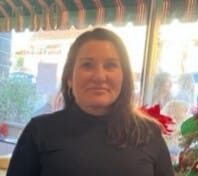
Samara Akpovo
Describe your project:
The “Parents and Caregivers as Educational Partners Collaborative” is funded by the Community Action Committee (CAC) Housing and Urban and Development (HUD) Choice Neighborhoods Transform Western Heights (WH) Grant. The aim of this program is to provide family-led educational experiences for the residents of the Western Heights neighborhood who are choosing not to place their children in traditional daycare, preschool, or other early childhood care settings for children birth to age 5. The project and outreach to the community is a collaborative effort with several community partners: Ms. Lisa Higginbotham from CAC, Ms. Caroline Platt from CAC AmeriCoprs, Ms. Chelsea Gouty from Knox County Health, and Ms. Linda Fore from the Boys and Girls Club, and Ms. Katie James from Theory and Practice in Teacher Education at UTK. While there is a plethora of summer programs for school-aged children and adolescents, few summer programs are developed for both the parent and the young child. For example, affordable summer learning programs for the parent and the child – birth to age 3 – are sparse across the US as well as in the Knoxville community. Early Head Start serves an estimated 4% of the income-eligible children in the Knoxville community. Based on the 2019 Population Estimates from the U.S. Census, in Knox County there were 26,492 children under age 5 (5.8% of the population). As of 2019, 5,868 (22.2%) of children under age 5 were living in poverty in Knox County (US Census Bureau ACS 2019 1-Year Estimates). Thus, the proposed service extends the continuum of care for low-income families and children who are not being served by Head Start.
What’s your why?
The why is to nurture “educational tenderness and empowerment” both in myself and the Western Heights community members by co-creating high-quality family-led learning environments within the home and Western Heights neighborhood.
Important lesson learned for people who are doing this work.
Show-up. Listen. Let go of pretense.
Impact made on UT and the community.
Knoxville, Tennessee has been characterized as a “childcare desert” in part due to rising costs of childcare, lack of qualified teachers, and shortage of drop-off and second-shift childcare centers or programs. Therefore, we established a birth to age 5 educational learning program where the Western Heights residents can consider new and innovative ways to create space and places where children and families can build a “peer” or “community” caregiving system. To create alternative pathways to learning, we began with a Summer Learning Program that focused on community gatherings, fieldtrips in Knoxville, and take-home curriculum materials backpacks for the parent and child. That is, the group met and talked about the Zoo to build interest, discuss our previous experiences with the Zoo, build rapport with each other over a meal, and then discuss logistics for the field trips. did some Zoo literacy activities. We then took a trip to the Knoxville Zoo for a scavenger hunt of animals (see attached pictures). Lastly, after the Zoo fieldtrip we sent the children home with curriculum backpacks so the parent and child could continue discussing, matching, reading, drawing, and playing with materials in ways that made sense to their family needs and interests. A curriculum sheet printed in Spanish and English was placed in the backpack as a “provocation” to generate ideas. Our grant was able to cover all costs for the families: healthy lunches, transportation to the Zoo, Zoo fees/membership, and all curriculum materials for the backpacks and community gatherings.
Program Goals
1. Increase the number of home-based activities and home-based centers that encourage parent-child engagement in the teaching and learning process. a. Increase the number of children from birth to age 5 enrolled in quality early learning centers, home-based care, or a parent-led childcare collaborative.
2. Facilitate peer-to-peer parent support groups, workshops, and field trips to cultivate innovative and culturally relevant approaches to children’s learning across content areas and milestones. a. Ensure that children are on track to meet milestones/standards as situated in cultural context
3. Illustrate the value of high-quality family-led teaching and learning in the home and community as indicated by the national, state, and global standards. a. Increase the visibility and access to language arts, mathematics, social studies, and science materials in the home and community.
4. Demonstrate how place-based education for young children can be implemented by families and children in the Western Heights neighborhood and Knoxville community. a. Families and children participate in formal and informal early learning settings, activities, and spaces. b. Children enter kindergarten ready to learn (i.e., exposure to learning spaces, routines, norms, and expectations when being part of a learning environment with adults and peers).